Bachelor in Development Economics
Program Overview
Vision, Mission, Objectives & Strategies
Vision
To become a leading study program in the development of regional economics, human resources, and monetary economics, characterized by sustainable glocalization values, environmental awareness, and internationally recognized agroindustry.
Mission
- To provide excellent education based on green economy and sustainable agroindustry, with a strong emphasis on glocalization to support the achievement of the Sustainable Development Goals (SDGs).
- To produce and advance research in regional economics, human resources, and monetary economics to strengthen the study program’s international recognition.
- To develop and implement innovative and applicable community service initiatives based on agroindustry and green economy principles.
- To develop excellent and competitive human resources in the fields of regional economics, human resources, and monetary economics, grounded in sustainable agroindustry.
- To establish the study program as a leading institution with an international reputation by strengthening global and national partnerships to support international recognition.
Objectives
The educational objectives are designed to produce graduates who are excellent, adaptive, innovative, and internationally competitive in development economics, with a focus on digital transformation, environmental sustainability, and agroindustrial development.
TP1. Development Analysis and Policy
To produce graduates capable of analyzing, designing, and evaluating development policies based on data, digital technology, and evidence-based policymaking to support inclusive and sustainable economic development.
TP2. DiSADE-Based Development Innovation
To produce graduates capable of developing innovative solutions to development challenges based on Digital and Sustainable Agroindustrial Development Economics (DiSADE), thereby strengthening regional economies, food security, and environmental sustainability.
TP3. Professionalism and Career Development
To produce graduates capable of pursuing careers in government institutions, development planning agencies, financial institutions, businesses, and development organizations while demonstrating professionalism, integrity, communication skills, leadership, and teamwork in dynamic working environments.
TP4. Lifelong Learning and Applied Research
To produce graduates capable of continuously developing their knowledge and competencies through lifelong learning, conducting applied research, and leveraging advances in science, technology, and innovation to address various economic development challenges.
TP5. Entrepreneurship and Community Empowerment
To produce graduates capable of becoming entrepreneurs and agents of social change who are committed to community empowerment, local economic development, green economy, and sustainable development through the application of development economics.
Strategies for Achievement
The strategies are implemented through the strengthening of the Three Pillars of Higher Education (Tri Dharma Perguruan Tinggi), institutional governance, human resources, national and international networks, and the implementation of DiSADE.
- To develop an Impactful Curriculum based on Outcome-Based Education (OBE) and the DiSADE approach, responsive to developments in economics, digital transformation, green economy, and labor market needs.
- To strengthen students’ competencies in data analysis, econometrics, quantitative and qualitative research, digital analytics, and evidence-based policymaking to support development decision-making.
- To improve the quality and quantity of research conducted by faculty members and students through the strengthening of research groups (Kelompok Riset or KeRis), multidisciplinary collaboration, research grants, publications in internationally reputable journals, and the development of innovations addressing community needs and the SDGs.
- To develop applied, participatory, and community empowerment-oriented service initiatives that promote local economic development through the implementation of green economy principles, entrepreneurship, digital transformation, and sustainable agroindustry.
- To enhance the quality of faculty members and educational staff through further education, professional competency certification, academic and digital training, increased international publications, and stronger global academic networks.
- To expand national and international partnerships with higher education institutions, government agencies, industries, research institutions, non-governmental organizations (NGOs), and the private sector in education, research, internships, the Merdeka Belajar Kampus Merdeka (MBKM) program, and curriculum development.
- To foster a strong academic culture by strengthening academic integrity, scientific ethics, research culture, scientific communication skills, and students’ character development and leadership.
- To develop a transparent, accountable, adaptive, and information technology-based study program governance system to support continuous quality improvement and the internationalization of the study program.
- To strengthen students’ entrepreneurial capacity in the digital economy and agroindustry through business incubators, student startups, entrepreneurial projects, and the development of local economic potential.
- To integrate the principles of the Sustainable Development Goals (SDGs), green economy, and sustainability into teaching and learning, research, and community service as a contribution to sustainable development.
Total Credits: 144
Study Duration: 8 Semester
Program Information
The main strength of PSEP FEB UNEJ lies in its Digital and Sustainable Agroindustrial Development Economics (DiSADE) approach, which integrates development economics with digital transformation, the green economy, and sustainable agroindustrial development.
Integration of Development Economics and Sustainable Agroindustry
The development of knowledge in development economics is linked to the sustainable agroindustrial sector, which serves as a distinctive characteristic of the University of Jember. This approach places local, national, and global development issues within the context of agroindustrial development.
Integration of the Green Economy and Sustainability
The curriculum, research, and community service activities integrate the Sustainable Development Goals (SDGs), the green economy, environmental economics, carbon economics, and sustainability principles.
Support from the Academic Environment of the University of Jember
UNEJ's focus on sustainable industrial agriculture innovation supports research development, network strengthening, the implementation of the Kampus Berdampak (Impactful Campus) initiative, and interdisciplinary collaboration to enhance students' competencies.
This profile integrates the mastery of development economics with data analysis skills, the utilization of digital technology, sustainability, and agro-industry development.
PL 1: Competence in the Public and Government
Sector Graduates are capable of serving as professional bureaucrats and development planners in formulating, implementing, and evaluating development policies that are data-driven, sustainable, and focused on developing leading sectors (agro-industry), while upholding the principles of good governance.
PL 2: Competence in Economic Problem and Public Policy
Analysis Graduates are capable of serving as professional economic and policy analysts in identifying, analyzing, and formulating solutions to development issues based on data, quantitative approaches, and sustainability principles, while remaining adaptable to advancements in digital technology. Graduates also possess the ability to analyze the real sector, particularly the agro-industry.
PL 3: Competence in Research and Development
Graduates are capable of serving as professional research assistants in supporting economic research activities through systematic data collection, processing, and analysis, as well as the preparation of scientific reports based on quantitative and digital approaches, alongside sustainability principles. The resulting analyses are relevant to the needs of economic development and public policy.
PL 4: Competence in Entrepreneurial Independence
Graduates are capable of serving as innovative entrepreneurs in identifying and developing business opportunities based on the digital economy and the agro-industry sector. This is achieved by processing agricultural resources into value-added products, employing an economic efficiency approach and sustainability principles, and utilizing digital technology to enhance the competitiveness of agro-industrial products in both local and global markets.
Curriculum Structure
The curriculum is updated periodically according to industry needs, utilizing advanced learning modules and field work.
Recognition & Academic Quality
Official accreditation status and quality assurance certificates.
Bachelor in Development Economics
Akreditasi Nasional S1 Ekonomi Pembangunan
Accreditation Archive / History
Arsip sertifikat akreditasi periode sebelumnya
| # | Accreditation Rating | Accreditation Agency | Year | Validity | Decree No. | |
|---|---|---|---|---|---|---|
| 1 | A | BAN-PT | 2018 | 31 August 2023 | SK/BAN-PT/S1-EKONOMI-PEMBANGUNAN/2018 | - |
| 2 | Terakreditasi - A | BAN-PT | 2017 | - | 2074/SK/BAN-PT/S/VI/2017 | Download |
Study Program Lecturers

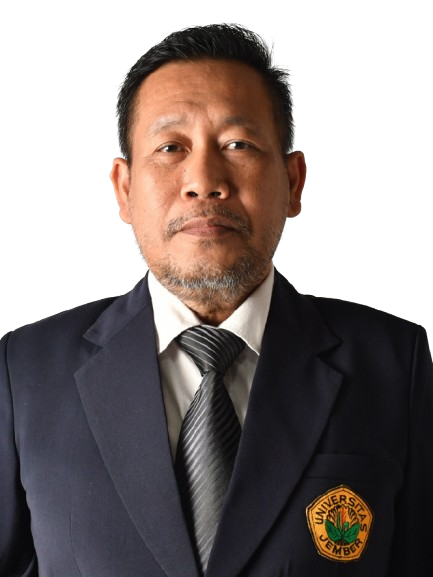
Dr. Herman Cahyo Diartho, S.E., M.P.
NIP. 197207131999031001 Coordinator of the Development Economics Study Program